
| Psilocybin Program Stands on Millenia of Indigenous Experience Lynne Terry - The Lund Report | |
| go to original April 17, 2022 |
 |
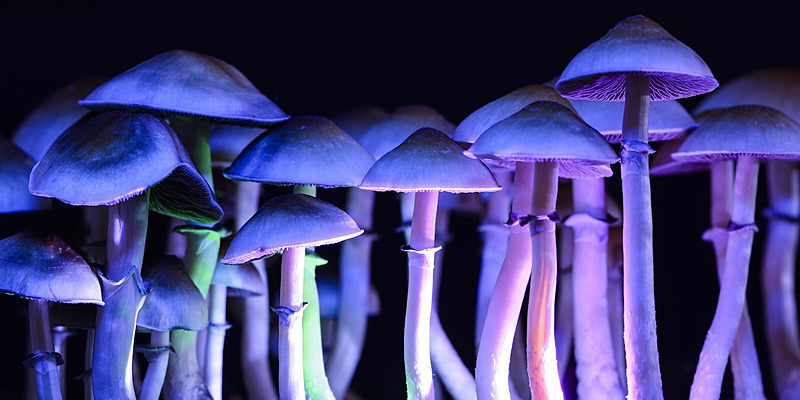
As the first state nationwide to develop a psilocybin treatment program, Oregon is standing on the shoulders of thousands of years of expertise among Indigenous people from Mexico to South America.
A new paper recently published in the journal Fungal Biology summarizes centuries of psilocybin use among shamans and guides who treated people for a host of ailments, from anxiety and rheumatism to toothaches and stomach pain. The paper, by nine researchers including senior author Jessie Uehling, assistant professor of fungal biology at Oregon State University, fills a knowledge gap for the state Psilocybin Advisory Council.
“This is a completely new program and endeavor of its kind that needs to be based in safety and informed by science. Consolidating that information into one or two places is really essential,” Uehling said. “Oftentimes when we hear about psilicybin we hear the historical context of U.S. scientists’ or European scientists’ work in the ’50s or ’70s but in actuality there’s been hundreds and thousands of years of usage by many Indigenous cultures, mostly in Central America and Mexico. We thought that that piece was really important to highlight.”
The program has high interest in Oregon, according to a recent study. It showed that thousands are interested in going through a psilocybin therapy session.
The paper says there are more than 300 species of psilocybin-containing mushrooms, and lists 13 that have been used by Indigenous people. Only one on that list – Psilocybe cubensis – will be allowed under the current rules proposed by the Oregon Health Authority. This species is one of the best known, Uehling said.
“Some of them have deadly, poisonous look-alikes that are visually identical that we want to avoid with public and consumer health in mind,” Uehling. “The other is to identify a fungi they need to have gene sequences, DNA sequences, in public databases and the information for these organizations is just not available.”
Focusing on this one species “will help ensure a safe launch for consumers,” she said.
In Oregon, psilocybin will be used to treat mental health issues. U.S. studies have found that it’s a promising treatment for depression, anxiety and PTSD. But its use among Indigenous communities is much wider.
“For many Indigenous people of Mexico, these mushrooms are part of a sacred and ancient tradition,” the paper said.
It’s been used to treat both spiritual and physical illness by inducing hallucinations and creating a “trance-like experience that is thought to allow dissociation of the soul from the body,” the paper states. The experience facilitates introspection, revelations and self-healing, it says.
“While practices vary between Indigenous groups, in general ceremonies are always done with care at night in a quiet place guided by an elder or shaman, no meals, alcohol, medicine or drugs are taken in advance, and travel is discouraged for a week after,” according to the paper.
Read the rest at The Lund Report
Related: Research Suggests Mushrooms Talk to Each Other With a Vocabulary of 50 ‘Words’ (Good News Network)

We invite you to add your charity or supporting organizations' news stories and coming events to PVAngels so we can share them with the world. Do it now!
 Banderas Bay offers 34 miles of incomparable coastline in the states of Jalisco and Nayarit, and home to Puerto Vallarta and Riviera Nayarit's many great destinations.