
| Trespassers on Rooftops: A Secret History of Mexico City's Cultural Revolutionaries Valeria Luiselli - The Guardian | |
| go to original November 6, 2015 |
 |
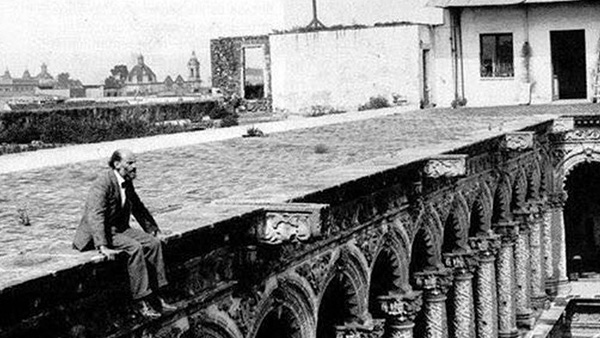
Dr Atl on the roof of former convent La Merced, with church cupulas in the background. (Instituto Nacional de Bellas Artes)
Mexico City rooftops – azoteas – are usually flat. A parapet wall encloses the roof area, creating a kind of open-air patio, less visible to neighbours than the common interior patios of colonial and neocolonial buildings, and not easily accessed by visitors.
The rapidly expanding city of the 1920s housed its working classes either in these small rooftop rooms (cuartos de azotea), or in the more well-known vecindades, Mexico’s version of tenement buildings. Brought to Mexico during the conquest in the 16th century, but transformed into the sort of living quarters we know today during the mid-19th century, the vecindades were the typical dwelling space for working-class families, and in them the urban lumpen were crammed into small rooms that surrounded a common patio. While these were occupied by members of the working classes whose jobs did not provide room and board, such as factory workers, builders, or street-vendors, the cuartos de azotea were occupied by maids and servants, usually migrants from the provinces, who worked for the family that lived downstairs.
Unlike the vecindades, which remained segregated and were always a space for the working classes and urban lumpen — even if they were appropriated as icons and romanticised by the middle and upper classes — the azoteas began to be inhabited by members of the middle-class intelligentsia during the early 20th century. All over downtown Mexico City — which the middle and upper classes had begun to abandon in order to move to wealthier, more modern colonias nearby — artists, writers and intellectuals started renting or simply occupying small rooftop rooms. Alfonso Reyes, for example, lived and worked in a rooftop room in Avenida Isabel la Católica around 1908. From there, he wrote one the earliest “panoramic” portraits of the city seen from an azotea.
Read the rest at The Guardian | Lea este artículo en español aqui
Related: The Guardian in Mexico City: How to Follow Our Stories and Get Involved (The Guardian)
We invite you to add your charity or supporting organizations' news stories and coming events to PVAngels so we can share them with the world. Do it now!
Celebrate a Healthy Lifestyle
 From activities like hiking, swimming, bike riding and yoga, to restaurants offering healthy menus, Vallarta-Nayarit is the ideal place to continue - or start - your healthy lifestyle routine.
 Banderas Bay offers 34 miles of incomparable coastline in the states of Jalisco and Nayarit, and home to Puerto Vallarta and Riviera Nayarit's many great destinations.