
| America's Junk Car-Battery Waste Is Making Mexican Communities Sick Joshua Partlow and Joby Warrick - The Washington Post | |
| go to original March 9, 2016 |
 |
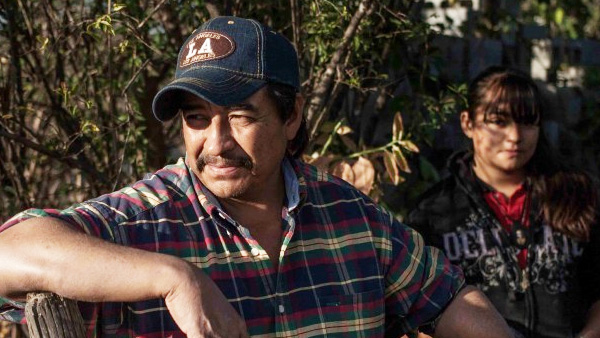
Juan Gonzalez Mendoza, 50, stands outside his home in Doctor Gonzalez, Mexico with his 13-year-old daughter Emily. Gonzalez, who has worked at the Eléctrica Automotriz Omega plant for eight years, became severely ill and had difficulty walking. A blood test revealed a high level of lead toxicity. (Dominic Bracco II/The Washington Post)
After the initial headaches and nausea, Juan Gonzalez Mendoza’s physical deterioration came swiftly: deep pain in his bones, elbows and knees that refused to bend, then numbness throughout his left side, steady loss of control over his arms and legs, and finally an inability to walk or even stand.
Company doctors where he worked — a battery recycling plant set amid thornbush hills near Monterrey — told him he had a fever. He soon became too sick to do his job feeding used U.S. car batteries into giant ovens. Private medical tests eventually confirmed the problem: acute lead poisoning.
“I lost my equilibrium,” said the 50-year-old Gonzalez, steadying himself against the front gate of his home a few blocks from the Eléctrica Automotriz Omega plant. “I lost everything.”
Gonzalez’s story reflects a common concern in the neighborhoods near the factory, where pallets of spent car batteries are converted into lead ingots to reuse in new batteries. Elevated levels of lead have turned up in workers’ blood, test results show, as well as in nearby lots where children play and families raise livestock, according to interviews with residents and current and former factory employees. Company officials did not respond to multiple requests by email and phone for comment.
The suffering is local, yet the lead in such battery-recycling plants mainly originates from miles away in the United States. In recent years, a tide of used batteries has swept into northern Mexico as metal recyclers seek to profit from the country’s relatively lax controls on lead exposure in the workplace and the environment.
While U.S. politicians express outrage over elevated lead levels in drinking water in Flint, Mich., they have done little to stem the flow of car batteries — each containing about 20 pounds of lead — south of the border. Officials estimate that the number of old batteries shipped to Mexico has grown by more than 400 percent in the past decade, spurred in part by tougher U.S. laws.
Read the rest at The Washington Post
We invite you to add your charity or supporting organizations' news stories and coming events to PVAngels so we can share them with the world. Do it now!
Celebrate a Healthy Lifestyle
 From activities like hiking, swimming, bike riding and yoga, to restaurants offering healthy menus, Vallarta-Nayarit is the ideal place to continue - or start - your healthy lifestyle routine.
 Banderas Bay offers 34 miles of incomparable coastline in the states of Jalisco and Nayarit, and home to Puerto Vallarta and Riviera Nayarit's many great destinations.