
| Mexico Needs Policy Based on Its Interests and Needs to End the Drug War Lorenzo Meyer - Reforma | |
| go to original April 1, 2016 |
 |
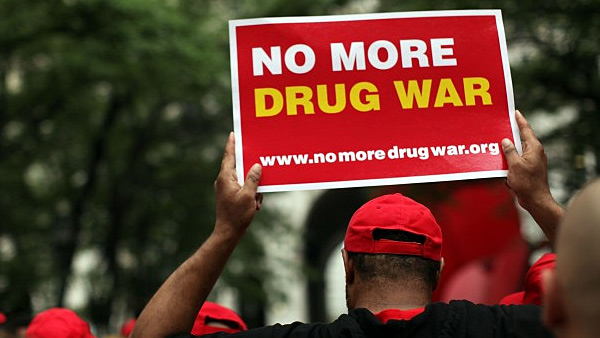
The “War on Drugs” initiated during the presidency of Richard Nixon has been lost. In Mexico, one of the most important battle fronts, the failure has been obvious for some time and at an international level is still an ongoing debate. In any case Mexico must once again take up the position that it attempted to in 1940 but which the US forced it to abandon: outlining a policy based on its interests and needs, without being tied to the priorities of others.
In order to verify the failure of the current regulations against drug trafficking you don't have to look very far, simply reading the news would suffice. To nobody’s surprise, the holiday week in March offered a genuine string of news stories related to a series of organized crimes that took place in Acapulco, at the center of which was drug trafficking, despite the fact that the port town was full of tourists, the military and police. It is because of this environment of a failed policy that the Senate held some meetings to discuss what the position of Mexico should be in a special session of the General Assembly of the United Nations on the international drug control system in April.
The ideas aired at the Senate were a true reflection of those circulating in other areas in the nation: the prevailing prohibition policy is unfeasible as it did not reduce the production or consumption of illegal drugs and yes, it had, and has, a high cost in lives, public resources, human rights violations, and senseless punishment of thousands of young people - the ‘small fish’ in the vast sea that is drug trade- and large scale institutional corruption.
What is already clear
The international drug trade was started by one of the major powers centuries ago, notably but not exclusively, England, which forced China to consume opium produced in India. Currently, the terms have changed, as the central economies are the greatest consumers and neighbouring countries like ours, are the producers and the exporters, but the prohibitionist stances still do not work and the majority of the damage is suffered by the countries with weaker institutional structures.
At this point, and after a century of international conventions and agreements, from the Shanghai Conference in 1909 about opium to the United Nations’ Plan of Action to Counter the World Drug Problem in 2009, the production, trade and use of drugs persists despite an annual expenditure of some 100 billion dollars by the governments involved in the War on Drugs (http://www.countthecosts.org/seven-costs).
Read the rest at Mexico Voices
Related: Will Mexico’s Surreal ‘Drug War’ Ever End? (The Daily Beast)
Related: What Is the U.S Doing to Reduce Drug Consumption and What Is Mexico Doing to Reduce Drug Trafficking? (The Yucatan Times)
Translated by Rebecca Nannery
Photo: PopularResistance.org Mexico Voices is a blogging endeavor aimed at raising the awareness of U.S. citizens regarding the destructive impact of the U.S. economic policy and the War on Drugs on Mexico — on its people, their economic and physical security and their human rights, on the nation’s dysfunctional justice system, and on the rule of law and Mexico’s fragile democracy. Visit the website at MexicoVoices.blogspot.mx.
We invite you to add your charity or supporting organizations' news stories and coming events to PVAngels so we can share them with the world. Do it now!
Celebrate a Healthy Lifestyle
 From activities like hiking, swimming, bike riding and yoga, to restaurants offering healthy menus, Vallarta-Nayarit is the ideal place to continue - or start - your healthy lifestyle routine.
 Banderas Bay offers 34 miles of incomparable coastline in the states of Jalisco and Nayarit, and home to Puerto Vallarta and Riviera Nayarit's many great destinations.