
| The Heartbreaking Search for Migrants Who Go Missing Crossing the US-Mexico Border Mercedes Matz - Global Voices | |
| go to original March 8, 2017 |
 |
These Volunteers Search for Migrants Who Go Missing Trying to Reach the U.S. (PBS NewsHour)
Desperate migrants currently pay thousands of dollars to smugglers so they can trek 50 to 80 miles along remote dangerous desert corridors between Mexico and the US that are designed to kill.
Every year, thousands risk the journey to improve their lives or flee the violence in their home countries.
Many migrants never make it across.
Over the years, thousands have gone missing, leaving their families searching for clues online of what went wrong.
The US south-western frontier is a “vast graveyard of the missing,” according to the No More Deaths / No Más Muertes, an Arizona-based advocacy group.
A spokesperson for the group says that tens of thousands of people have disappeared since the 1990s. More than 6,000 people have been found dead over the past 16 years attempting to enter the US from Mexico along the desert, according to US border patrol agents.
These migrants face potential risks from their smugglers, US border patrol agents, kidnappers, armed American anti-immigration activists and lethal snakes, spiders and scorpions. They could also die from dehydration in a desert that reaches 110°F (43°C).
The migrants that die often leave trails of clues behind, like the clothes they were wearing, or the few possessions they had on them. Here are two examples of a digital platform and Facebook page that are connecting families of missing migrants in Mexico, Honduras and Guatemala to photographs of these clues.
Bracelets, buckles and the clues they left behind.
I Have A Name/ Yo tengo Nombre is a database that seeks to facilitate relatives of missing migrants. The database can help families figure out if their loved ones were victims of crime in Central America, whether they were kidnapped in the south of Mexico, detained in the north, or were able to reach safety.
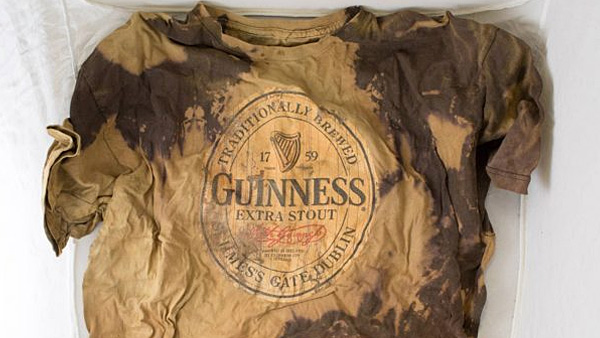
Case 0409: “Brown T-shirt with a Guinness logo. White Nike brand shoes 8.5 US size. Red underwear, Funk brand, size XL. Found on Dos Palmas Ranch.” (I Have A Name/ Yo tengo Nombre)
The digital project contains photographs of personal items discovered among the belongings of migrants found in south Texas. This is the initiative of the Austin-based nonprofit news organization Texas Observer, which, with the permission of forensic experts, photographs clothes, rosaries, jewelry, belts, shoes, combs, bracelets, hats, backpacks, buckles, and anything that could help identify who these people are.
Since the 1990s, most of America’s 2,000-mile frontier with Mexico has been increasingly aggressively defended by drones, cameras and sensors, a 700-mile fence and a heavily militarized US border patrol. The official border patrol strategy created in 1994, ‘was to create conditions that would cause more migrants to die in hostile terrain, in order to deter other migrants from making the trip,’ according to the Guardian.
When migrants make the difficult physical and financial decision to cross the desert border, they usually rely on smugglers to help them navigate dangerous desert trails. Many times, smugglers deceive their “customers” by telling them that the passage is safe, but in reality, the terrain is treacherous, there are vigilant border patrol agents, extreme weather conditions and water shortages.
The Washington Office on Latin America (WOLA) has pointed out that the increase in migration is a humanitarian crisis, not a threat to the US national security.
The Facebook page with photographs of the dead
There is also a Facebook page called “Desaparecidos y sin reclamar en la frontera” (“Missing and unclaimed at the border”) with the same aim, and it includes photographs of tattoos that facilitate the identification of bodies. On the Facebook page timeline you can find messages like this:
FAMILY MEMBER LOCATED. THANK YOU FOR SHARING !! (…) Body found on Tuesday, 3 January 2017 in Rio Grande, Hidalgo, Texas. The body showed moderate signs of decomposition, and it was determined that he was an adult male, about 30 to 40 years old.
Searching for clues, families often share photographs and information of their missing loved one on this Facebook page.
Read the rest at Global Voices
Translated by Teodora C. Hasegan
Related: More Immigrant Deaths on Northern Mexican Border (Prensa Latina)
We invite you to add your charity or supporting organizations' news stories and coming events to PVAngels so we can share them with the world. Do it now!
Celebrate a Healthy Lifestyle
 From activities like hiking, swimming, bike riding and yoga, to restaurants offering healthy menus, Vallarta-Nayarit is the ideal place to continue - or start - your healthy lifestyle routine.
 Banderas Bay offers 34 miles of incomparable coastline in the states of Jalisco and Nayarit, and home to Puerto Vallarta and Riviera Nayarit's many great destinations.