
| Latin America Calls out Rich World for Starting a 'Currency War' Worldcrunch | |
| go to original February 25, 2013 |
 |
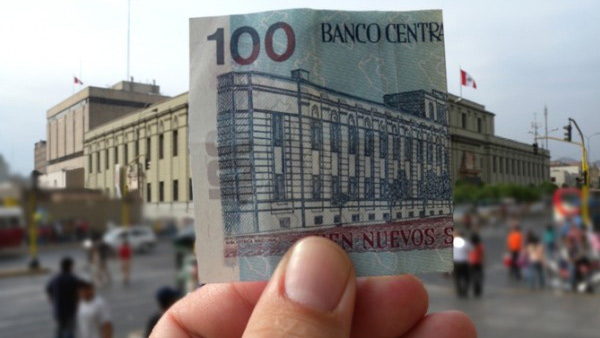
Peruvian sole - (Zieak/America Economia)
While Argentina and Venezuela have had to devalue their currency as a result of rampant spending and foreign exchange shortages, the rest of Latin America faces exactly the opposite problem.
Local currencies have appreciated against the dollar, which has had three negative effects. It is bad for exports; economies have become less competitive in foreign markets; cheap imports have invaded local markets.
The Chilean peso is the currency that has appreciated the most against the dollar in recent months, but then again, so have the Peruvian sol, the Colombian peso and the Mexican peso. During the global financial crisis of 2008, it was the Brazilian real that appreciated the most; to the point that many analysts said that in 2010 it had become the most overvalued currency in the world.
This was when Brazilian Finance Minister Guido Mantega accused the U.S. of starting a “currency war,” after the Federal Reserve announced its first round of “quantitative easing” and began to purchase tons of government bonds with newly issued money. Today, the Fed is in its third round, purchasing $40 billion of mortgage-backed securities every month, with the dollar dropping against major currencies.
Similar programs in Japan and the UK are devaluing the yen and the pound, adding to claims that the developed world has ignited a currency war. These claims were discussed in the G7 and G20 meetings this week.
However, there is no such currency war. The phrase is wielded against the U.S. (and Japan and the UK) because such talk attracts media attention and brings back memories of a historical cataclysm. The only real currency war occurred in the 1930s, when the U.S. and European countries began to devalue their currencies one after the other and one against the other – with the aim of promoting exports and limiting imports. This led to protectionism and the collapse of trade and the inflation and depression of the 1930s that brought the Nazis to power in Germany.
During a currency war, countries devaluate their currency in order to sell more to others and buy less from them.
Read the whole story at Worldcrunch
We invite you to add your charity or supporting organizations' news stories and coming events to PVAngels so we can share them with the world. Do it now!
Celebrate a Healthy Lifestyle
 From activities like hiking, swimming, bike riding and yoga, to restaurants offering healthy menus, Vallarta-Nayarit is the ideal place to continue - or start - your healthy lifestyle routine.
 Banderas Bay offers 34 miles of incomparable coastline in the states of Jalisco and Nayarit, and home to Puerto Vallarta and Riviera Nayarit's many great destinations.