
| A Messy Start for Mexico’s Law to Protect Indigenous Art The Verge | |
| go to original February 24, 2022 |
 |
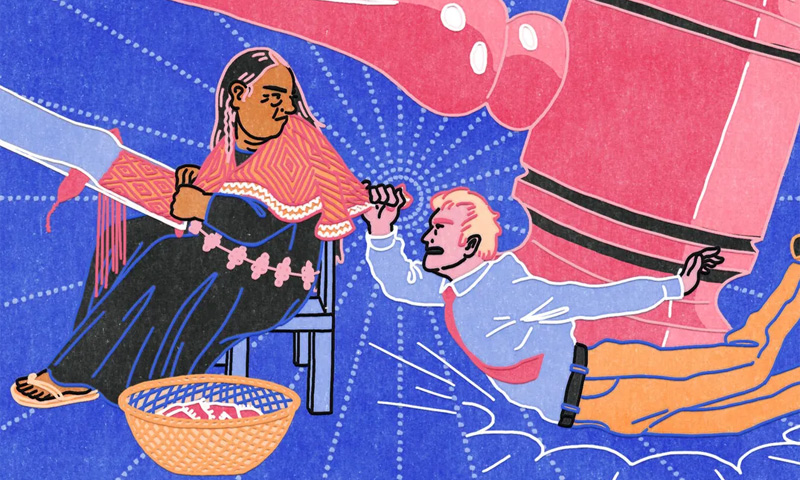
To fight back against the plagiarism and dispossession of Indigenous art, Mexico has approved a law meant to protect and safeguard the cultural heritage of Indigenous and Afro-Mexican peoples and communities. It recognizes the collective right to intellectual property of these communities, calls for the creation of a National Registry of Cultural Heritage, and allows the government to prosecute theft of a cultural work. On the surface, it’s a bold step toward dealing with cultural appropriation and remedying some of the ways these communities continue to be marginalized.
Whether the law actually works is another question. Indigenous defenders and legal experts have raised concerns about implementation of the law — the Federal Law for the Protection of the Cultural Heritage of Indigenous and Afro-Mexican Peoples and Communities — and whether Indigenous and Afro-Mexican peoples were able to actively participate in its crafting.
Legal experts have criticized the law’s broad and vague provisions on ownership, coupled with the fact that it doesn’t specify how the compensation for theft will be distributed. Intellectual property lawyer José Dolores González says that the law seems very ambitious, but it fails to clarify how it will be anchored in practice.
“For example, every Mexican has the right to a house, every Mexican has the right to a decent job,” explains González. “These rights, in their content, in their human spirit, are very good. But in the daily practice of the law it becomes very complicated because the instruments to implement it are not explained.”
Mexico’s law, which came into effect last month, grants Indigenous and Afro-Mexican communities the authority to grant temporary licenses to companies to use their designs and get paid for it. It’s not clear, however, who in the community can give this authorization. Likewise, the law says that any contracts or agreements made by any member individually will be null.
“It says that the community must authorize, but who is the community? And that the people have to give authorization; who is the people? You get stuck here,” adds González. “Who are the people? Five people? Twenty people? The oldest person in town? One thousand people? The ejido commissioner?”
In addition to the challenges of determining who represents the communities, there is the problem of using the term “cultural heritage” to define what is being protected. Patricia Basurto, an academic at the Institute of Legal Research at the National Autonomous University of Mexico, warns that the law could generate social conflicts since several communities can claim the use of the same cultural heritage item.
Read the rest at The Verge
Related: Mexico Accuses Zara, Anthropologie & Patowl of Cultural Appropriation (Reuters)
Related: Zara Pulls Mexican Clutch Amid Claims of Cultural Appropriation (WWD)

We invite you to add your charity or supporting organizations' news stories and coming events to PVAngels so we can share them with the world. Do it now!
From the Bay & Beyond
Celebrate a Healthy Lifestyle
 From activities like hiking, swimming, bike riding and yoga, to restaurants offering healthy menus, Vallarta-Nayarit is the ideal place to continue - or start - your healthy lifestyle routine.
 Banderas Bay offers 34 miles of incomparable coastline in the states of Jalisco and Nayarit, and home to Puerto Vallarta and Riviera Nayarit's many great destinations.