
| Why Do Some People Chose to Ignore Severe Weather Alerts? PVDN | |
| go to original October 7, 2022 |
 |
Update: Sinaloa Cartel Delivers Food Baskets to Families Hit by Hurricane in Mexico (Breitbart)
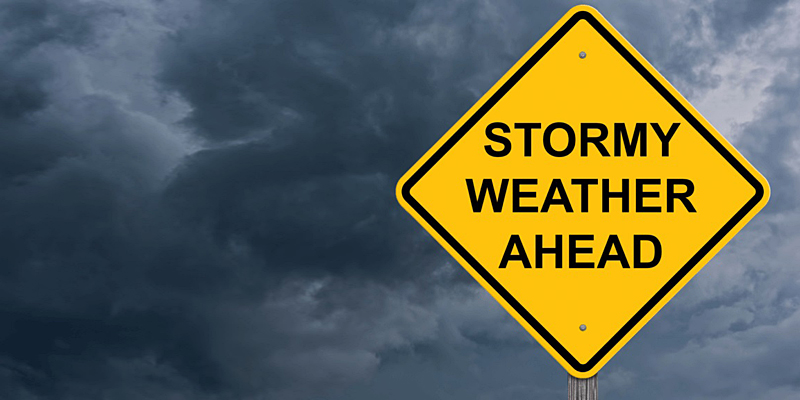
The obvious reason is that so many times the bark is far worse than the bite when it comes to weather predictions and the issuance of warnings to the public, so the population almost certainly sees the threat much less than what they are being warned, which is exactly the cast for Hurricane Orlene in Puerto Vallarta last weekend. But that doesn’t mean you should start ignoring whether alerts because sometimes the bite is actually worse.
Watching interviews from victims of Hurricane Ian in Florida last week, it struck me how many of the people said ‘We didn’t think it was going to be this bad’, although the news for days prior had been reporting a dire situation.
According to AccuWeather.com, in a time where technology and meteorology are very precise, psychologists and meteorologists are working together to evaluate better warning systems.
Dr. Laura Myers, director and senior research scientist at the Center for Advanced Public Safety, who studied warnings and how people react to them, said people have a tendency to not want to change plans or their behavior for weather unless they are fairly sure the weather is going to impact them.
Myers said people get desensitized to watches and warnings after so many don’t produce any impacts for their specific area.
“Improvements in the warning process are addressing these issues and providing more specific geolocations and more lead time when possible,” Myers said.
Alert notifications that are targeted to an exact location and provide more lead time to help people react better. Also, warnings with potential impacts and calls to actions help people better respond to threatening weather.
“When people hear what the weather impacts are, such as damage and destruction to well-built homes, they start to pay attention. When they are told they need to take shelter now because their location is going to take a direct impact, they usually act,” Myers said.
The word emergency, such as a tornado emergency or flash flood emergency, tends to get the attention of people, Myers said.
The time a warning is issued to the public can also make a difference in response. When people are given too much lead time, they can get tired of waiting and tend to go back to their business, Myers said.
“That’s why we have to be careful giving too much information several days out from an event. There is a real communication process involved in the sequencing of information in the days and hours leading up to an event,” Myers said.
Regardless of the warning, some people wait until they see their life is in danger.
“A lot of social media research was done and people said they have to see [a tornado] before they do something,” AccuWeather Meteorologist Dan Kottlowski said.
Mike Smith, Senior Vice President of AccuWeather Enterprise Solutions and author of Warnings: The True Story of How Science Tamed the Weather, said there are many reasons why people wait to react.
“There is considerable inertia in people. They are busy or their attention is on some project. There is also sociological evidence that people feel silly for taking shelter; that it somehow reflects poorly on their courage,” Smith said.
He said in order to get people to take shelter or evacuate, it seems warnings need to come from someone they trust. Receiving the warning from more than one source can also help, Smith said.
“We try to issue the warnings very early now so they take cover, but people need to see that something’s coming at them,” Kottlowski said.
Therefore, Kottlowski said they have started enhanced warnings, which are warnings with amplified wording like severe and imminent danger.
“Not all warnings have enhanced wording, it’s only when we have a situation when we have a big tornado already causing damage,” Kottlowski said.
Meteorologists and psychologists are looking at more than just the wording.
“Psychologists are working with meteorologists to come up with an understanding of why people are just not adhering to the warnings, maybe it’s a combination of wording and graphics,“ Kottlowski said.
Kottlowski said radars don’t make sense to some people, so there needs to be a simple graphic that will show were the most dangerous impacts of the severe weather will occur.
However, broadcasters are able to explain radars to people in a simple, urgent manner.
“The really good television meteorologists have mastered the art of using tone of voice and other cues to persuade people to take action when they are convinced a really dangerous storm is occurring or imminent,” Smith said.
That will still not solve the problem entirely, experts agree.
“When you get a really bad outbreak where you have multiple tornadoes moving very quickly, you are still going to have a lot of fatalities and injuries because people aren’t going to be able to get out quickly enough,” Kottlowski said.
Technology, meteorologists and psychologists are making immense improvements and progress to help save the lives of people across the globe.
“The goal is to communicate weather information to an educated public who knows what to do when the time comes,” Myers said.
Read the rest at PVDN
Related: Jalisco Coastal Municipalities Receive Aid Following Hurricane Orlene (Vallarta Today)
Related: More Than 2,000 Earthquakes Were Recorded in Mexico During the Month of September (PVDN)
Related: Cone of Confusion: Why Some Say Iconic Hurricane Map Misled Floridians (Washington Post)
We invite you to add your charity or supporting organizations' news stories and coming events to PVAngels so we can share them with the world. Do it now!
From the Bay & Beyond
Celebrate a Healthy Lifestyle
 From activities like hiking, swimming, bike riding and yoga, to restaurants offering healthy menus, Vallarta-Nayarit is the ideal place to continue - or start - your healthy lifestyle routine.
 Banderas Bay offers 34 miles of incomparable coastline in the states of Jalisco and Nayarit, and home to Puerto Vallarta and Riviera Nayarit's many great destinations.